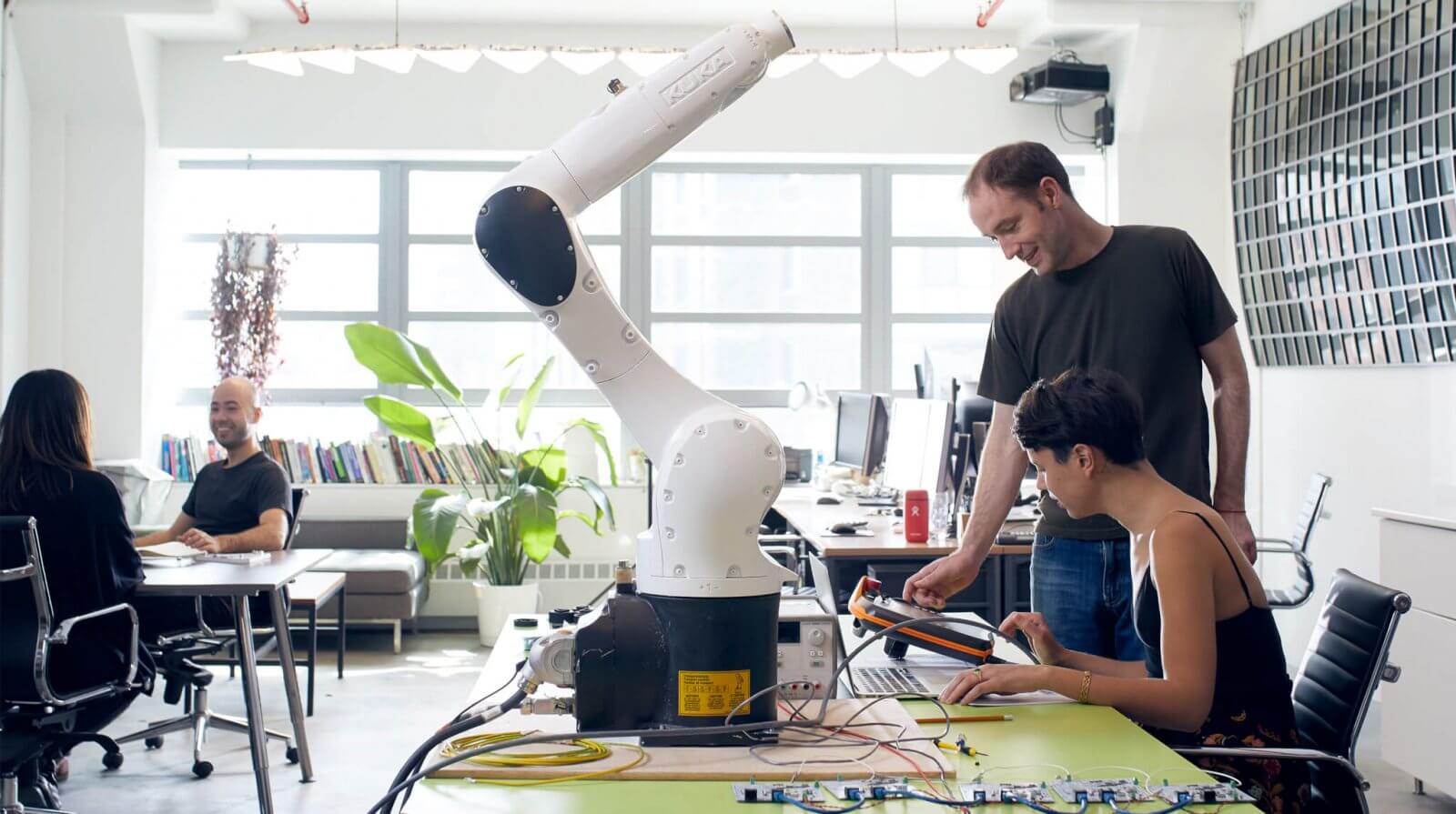
We make physical space interactive. Our work moves beyond static digital interfaces to bring interactivity directly into the built environment, resulting in multi-sensory experiences that are enhanced, rather than supplanted, by technology. This might take the form of a sculpture in a building lobby that subtly responds to passersby, or an installation at an experience center that playfully introduces a new product to customers. We focus on creating shared experiences that leave people feeling connected to a place or a brand.
Patten Studio was founded in 2006 by MIT Media Lab PhD and TED Senior Fellow James Patten. As Principal, James leads a team of artists and creative technologists specializing in a range of disciplines, including but not limited to: lighting design, sound engineering, projection mapping, software development, electronics design, mechanical design, robotics, and kinetic sculpture.
We reinvest half of studio profits in internal R&D projects to explore the future of interactivity and remain on the cutting edge of interaction design. This allows us to deliver interactive experiences to our clients that have never been done before.
Want to hear more about James? Read Meet James Patten.
Interested in learning about our Design Principles? Read Architecting Experience.