The making of a kinetic sculpture.
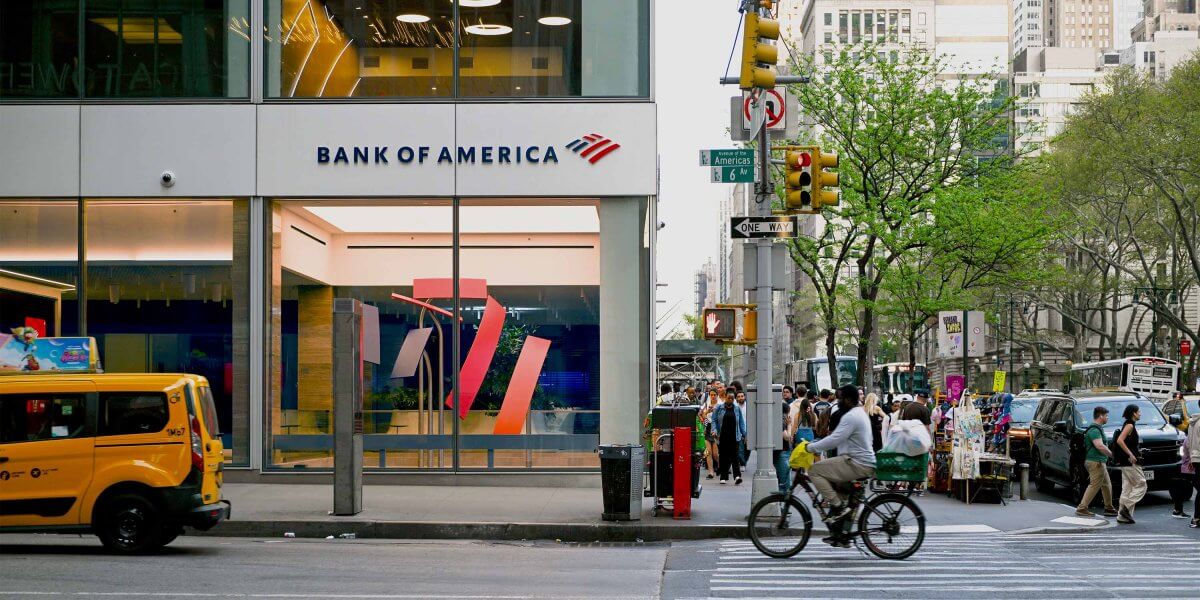
In the last STUDIO LAUNCH we spoke with studio Creative Director Hortense Duthilleux about the creative process that led to Flagscape, our 15’ kinetic sculpture installed last spring on the corner of 42nd Street and 6th Avenue.
This month we wanted to take a deeper dive into the technical work that brought Flagscape together. (There’s a lot, so buckle up.) We sat down and had a chat with the design team to talk about the plot twists and the “discoveries” we made (i.e. surprises) while working on this project, and the clever engineering our team pulled off to build a 15’ tall kinetic artwork with 6 unique rotational axes that spin 360° 24 hours a day 365 days a year and never collide. . . .

Originally the client came to Patten Studio to propose a ceiling mounted sculpture in a two story atrium at the corner of the building. “We did a lot of exploration early in design development and came up with three different ways we were going to hang the piece,” says Creative Director Duthilleux. “Then it became a floor mounted sculpture in a one story atrium.” This change ultimately worked out in the artwork’s favor—it meant that the sculpture’s base and all of the power and data that gets run to the kinetic elements could be buried in concrete and made completely invisible. “That freed the language of the support system to become much more elegant.”
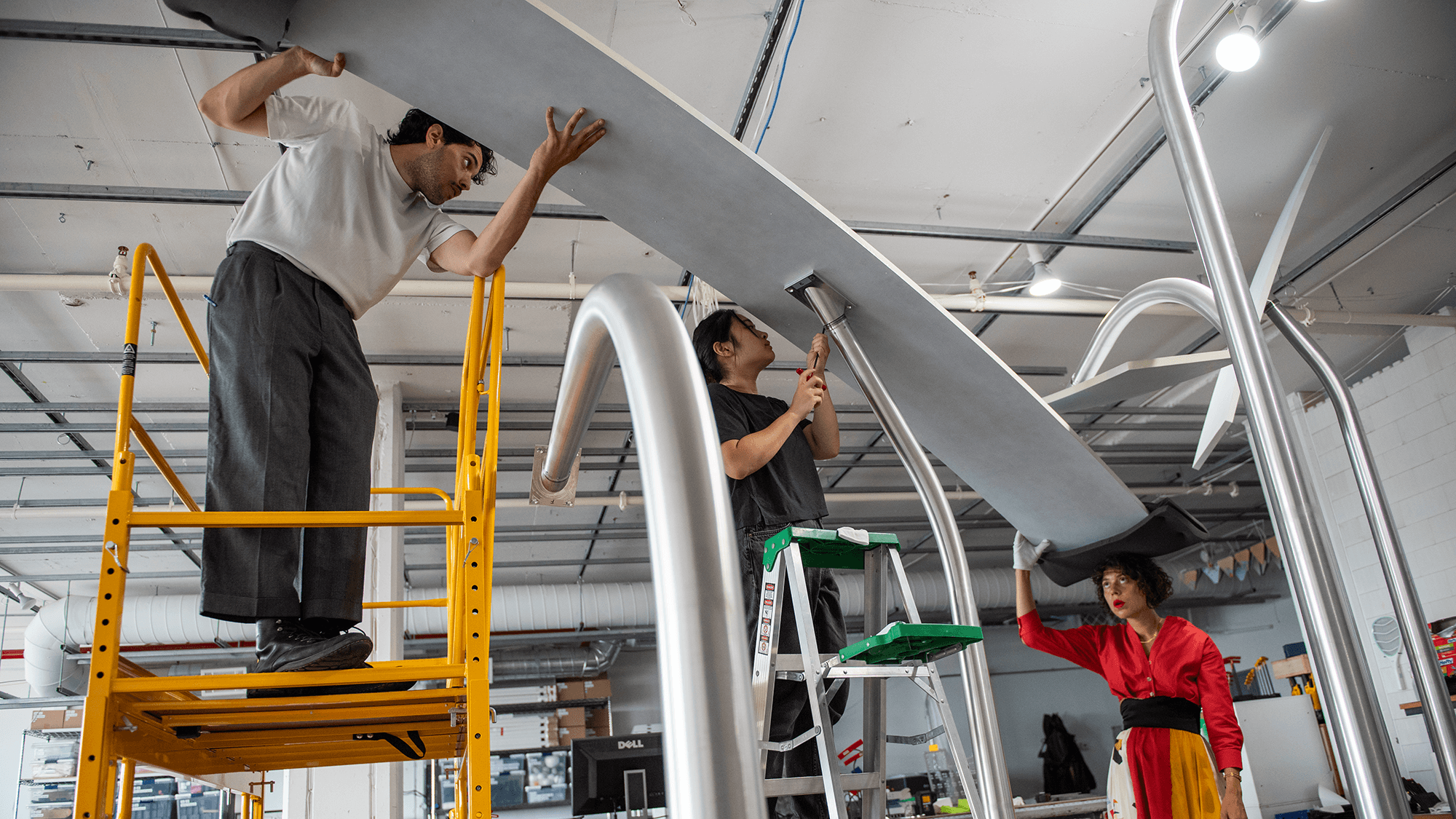
The resulting design decision was to balance each panel on a bent tapered tube that would resemble an abstracted tree branch. “Something I learned designing the tubes is that you can’t really bend and taper hollow metal at the same time,” shares Design Engineer Doreen Chin. To get around this, the poles were fabricated in parts that were then welded together; the bottom part got bent, and the top part got the taper. Because there’s only 4″ of buffer between Flagscape’s panels, Patten Studio worked with a specialty metal fabricator to get the bend radii perfect, using CNCed templates to check the dimensions.

The next challenge was alignment. The poles had to be completely vertical. During the first assembly in the studio the team used lasers and CNC cut discs to align the poles vertically. “It was pretty time consuming,” Architectural Designer Christopher Scheu shares. For installation on-site, Scheu 3D printed a jig onto a digital level. This way, by pressing the jig to a pole and walking around it, Scheu would know that the pole was vertical if the number on the level remained constant. Meanwhile, the orientation of the poles’ tapered ends needed their own set of jigs—a giant template that was placed on the floor between the poles that indicated which way each pole faced, with the precise angle confirmed with a laser.
By the time the team finally got the artwork to Midtown we had already installed and de-installed it twice, in the studio and in our testing site across the Navy Yard, so things went pretty smoothly. “It was a good opportunity to refine the alignment process,” says Scheu.

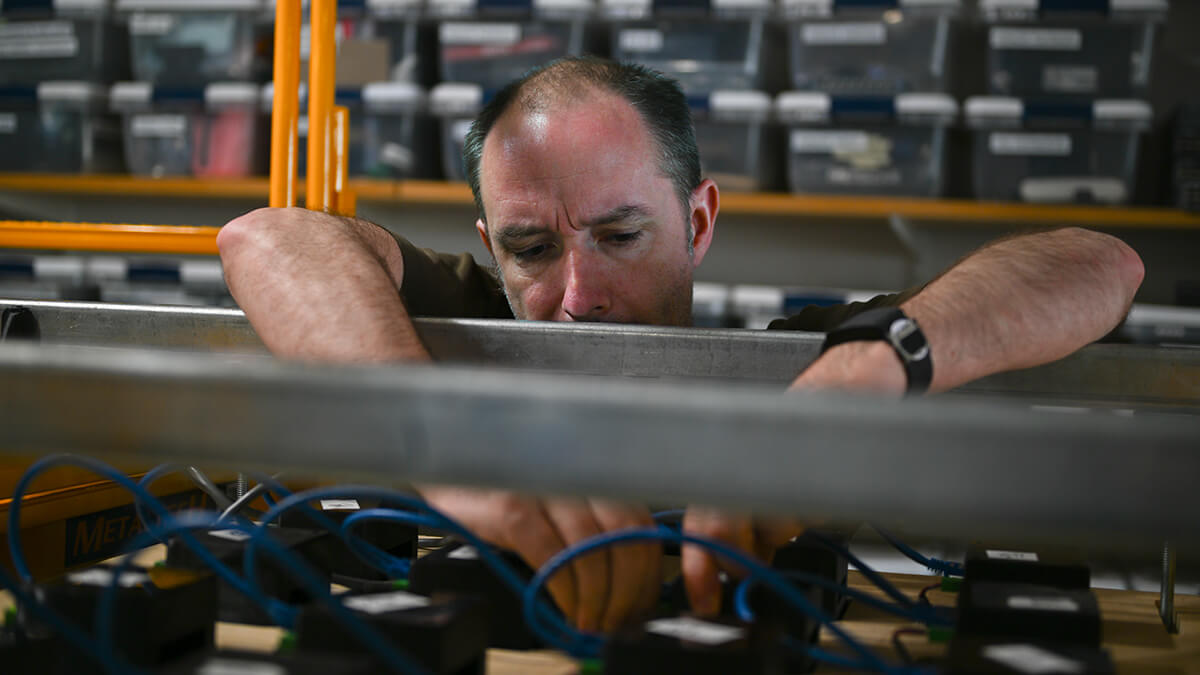
Once the team had figured out the sculpture’s design and architectural integration, we were able to focus on the electronics and software that would rotate the panels. “We’ve been doing this for so long that there are certain tools we can reuse or adapt across projects,” says studio Principal James Patten. “The office has a suite of motor controllers, so when we told our electrical engineer we needed to shrink one down to 2 inches so it could fit inside the tapered end of the support pole she made it work.” The sculpture’s choreography could then be designed in Blender and fed to the EXPONENT motor controller at the end of each tapered pole.
“There’s always something with every project that we haven’t run into because the studio thrives on making new work,” Patten adds. “We probably won’t repeat the bent tapered poles anytime soon, but if we do, now we know how to make them.”
Well, that’s all for Flagscape for now. If you’re in Midtown shoot us a selfie with the artwork! If you’re trying to plan a sculpture somewhere else in the country (or abroad) shoot us an introductory email at info@pattenstudio.com, or call (718) 414-6158.
Like our vibes? Follow us @pattenstudio on Instagram.