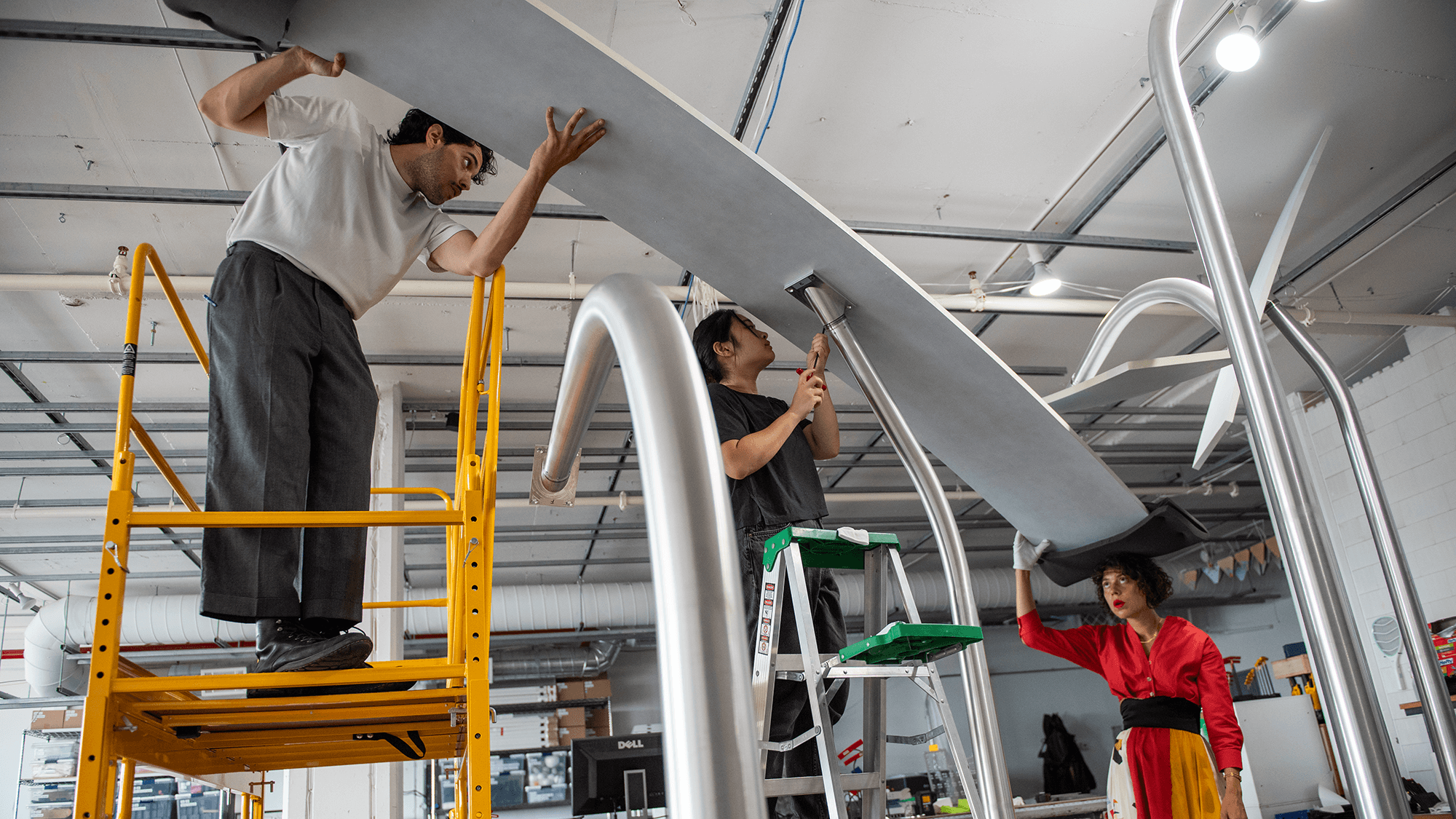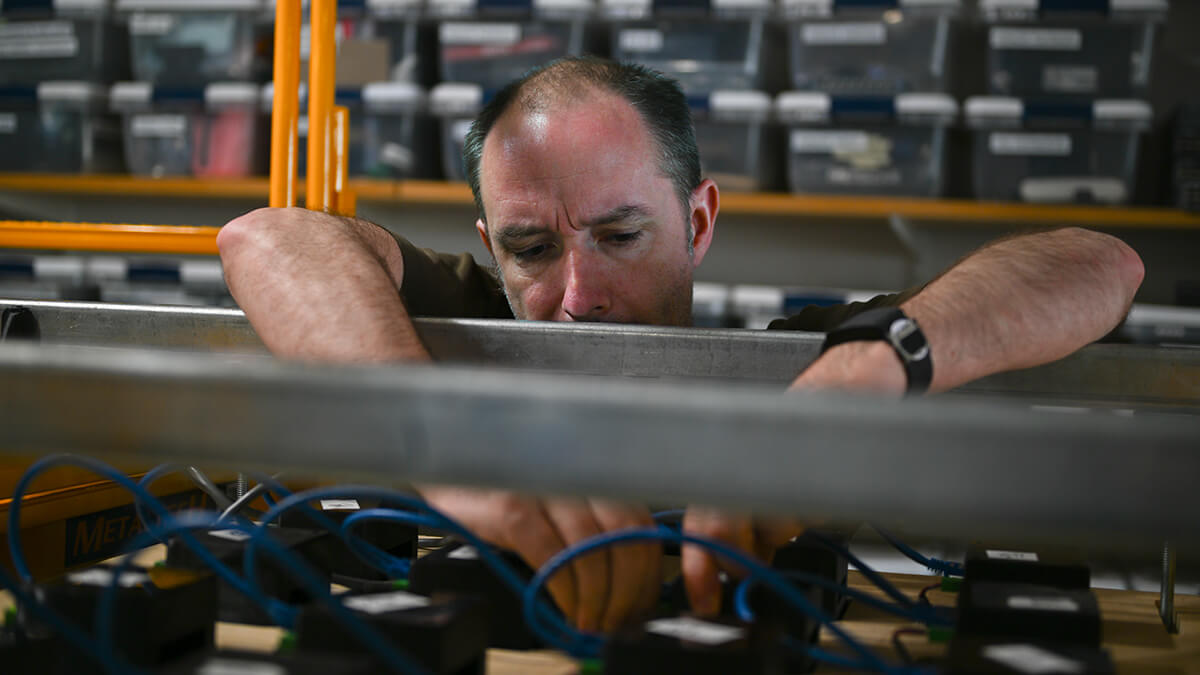
It's 98° in New York City but our soldering iron is 700°.
In the last edition of STUDIO LUNCH we showed Flagscape’s 900lb steel frame being welded to the structural beams beneath the finished floor. In a previous edition we showed our team installing mechanisms behind the wall that supports a large kinetic installation. This summer we’re back above the ceiling designing another suspended light sculpture.
So watch your head, because space is limited inside the 2′ vertical cavity where we’re installing the structure that supports our latest project!
(Anything to get out of the heat, am I right?)
We’ve built a bunch of ceiling-mounted sculptures in recent years. (Check out our Instagram to see All Points Canada and Ceramic Cloud installed at Google Toronto. Shoutout SOSO for two incredible concepts!) All of these sculptures look different and have their own distinct behaviors: All Points Canada is kinetic, whereas Ceramic Cloud is composed of DMX-controlled luminaires. But despite how different these projects are below the ceiling, they have a lot in common above the ceiling, out of sight.
Most of the ceiling sculptures the studio designs or fabricates are modular for ease of installation and servicing. This means that the sculpture is broken down into puzzle pieces that are mounted to the surrounding architecture. These modules all have 2 major strata: above the ceiling (#1), and below (#2).
Above the ceiling: the artwork’s hidden support structure. Above the ceiling you can see that the artwork is broken down into segments that can be installed or deinstalled one at a time.
Below the ceiling: the part you see! The artwork’s visible elements are suspended from the support structure above the ceiling, through the finished ceiling, and form a continuous whole underneath.
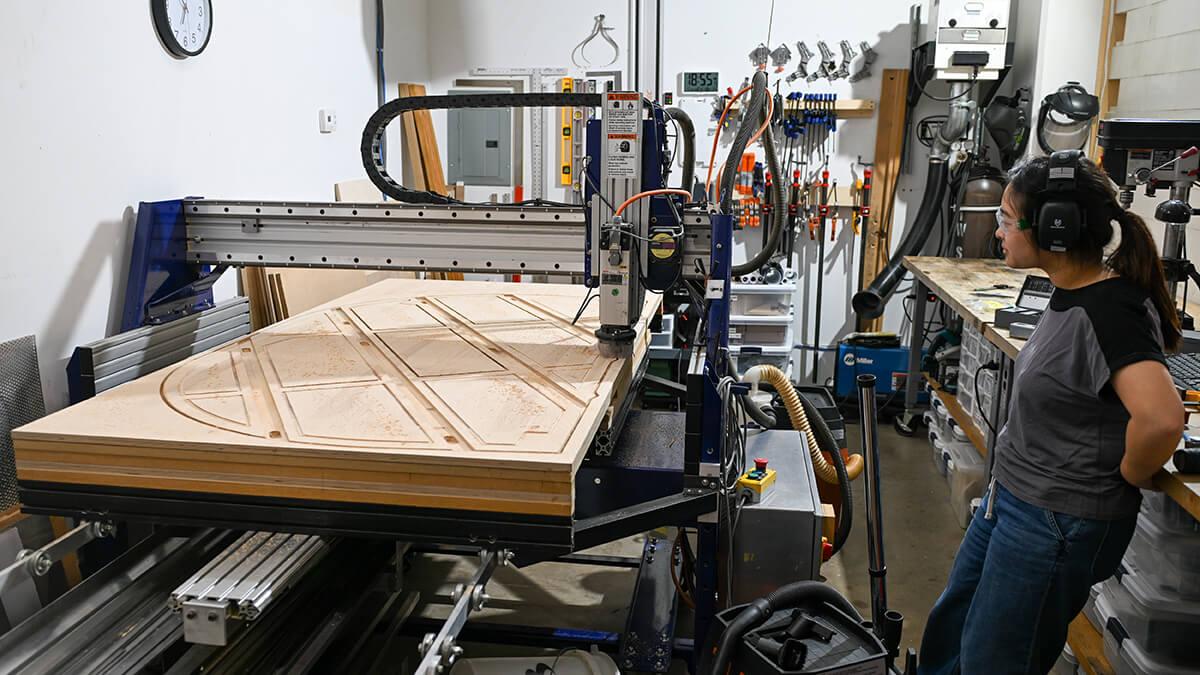
Frequently it takes more time, engineering, and fabrication labor to produce the structure above the ceiling than it does to produce the visible elements that reside below. We think that’s kind of cool! So we’re devoting this whole newsletter to the hidden layer of design, engineering, and fabrication work that gets the artwork up off the ground, so to speak, and keeps it there.
ARCHITECTURAL INTEGRATION
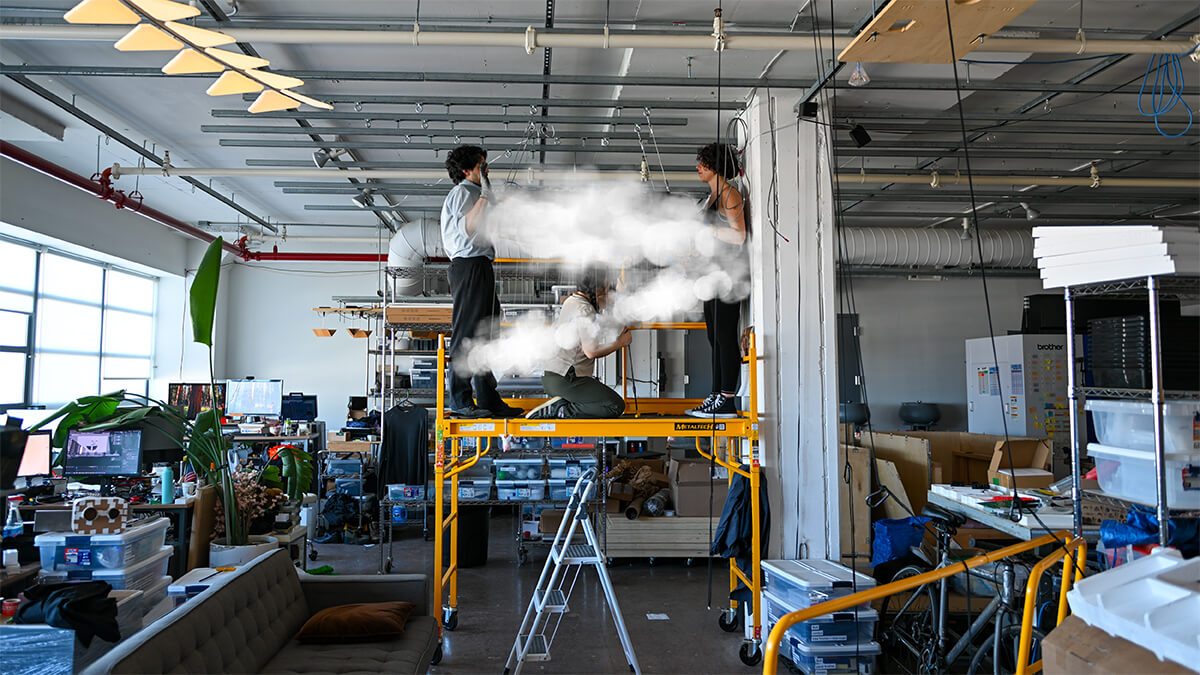
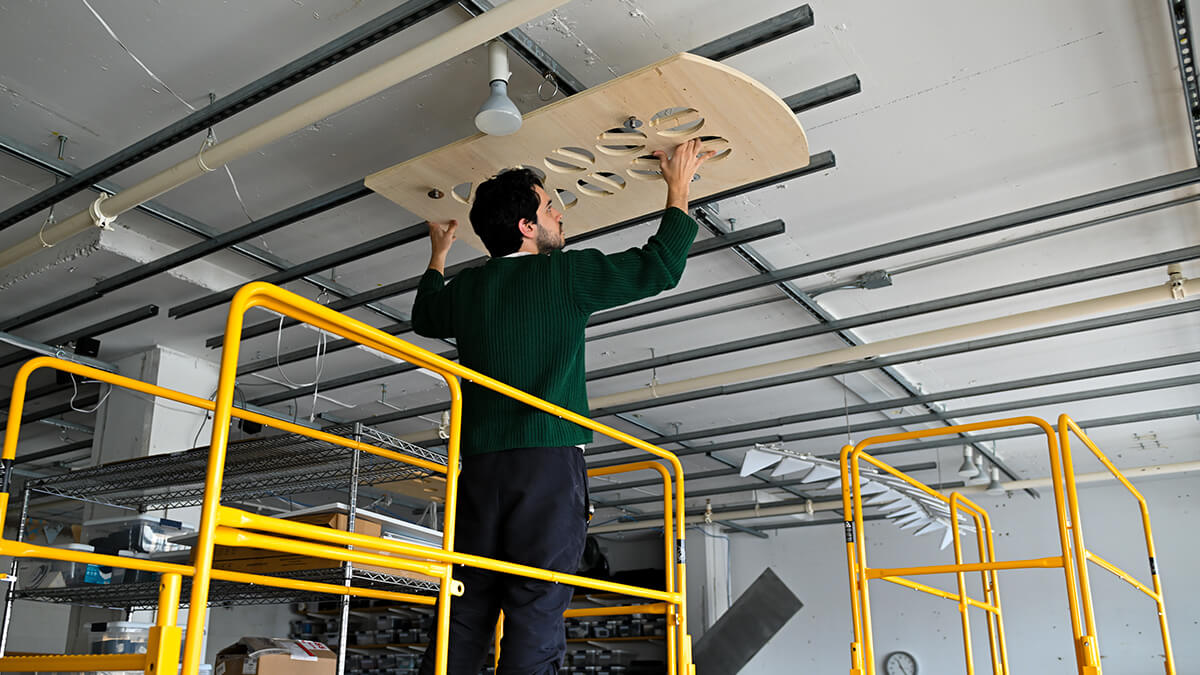
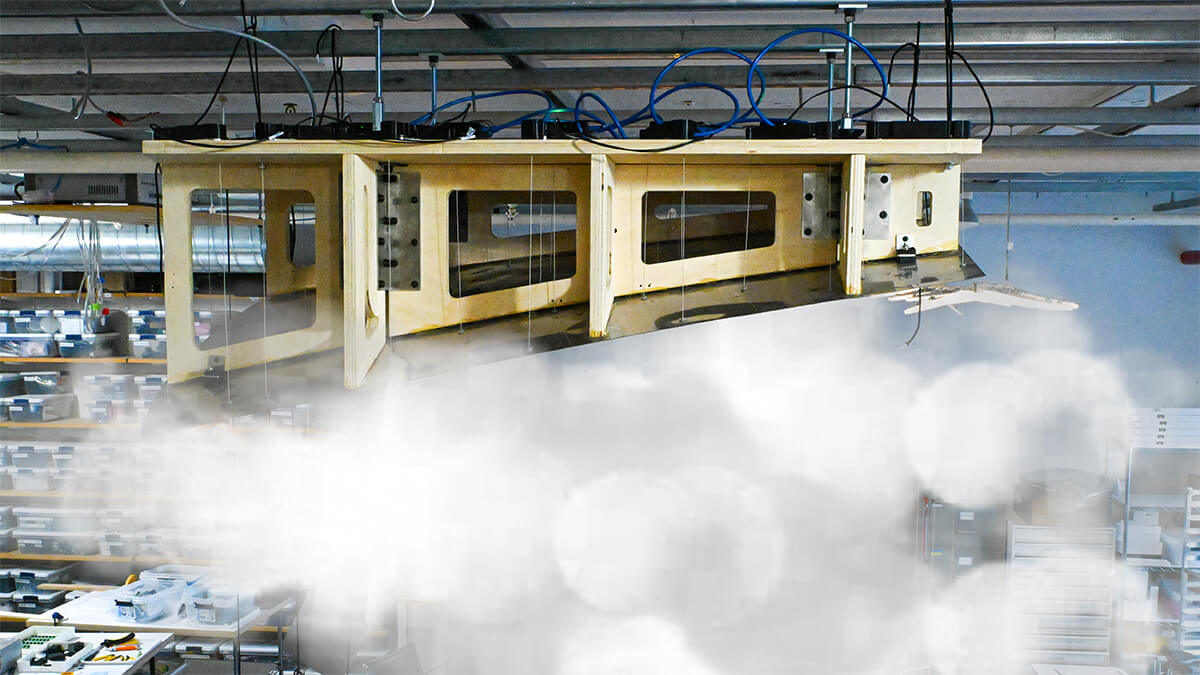
Typically the sculpture modules above the ceiling are composed of flat panels of Class A fire rated plywood. Above in the third image, you can see Christopher installing a flat plywood panel onto the Unistrut grid in our office.
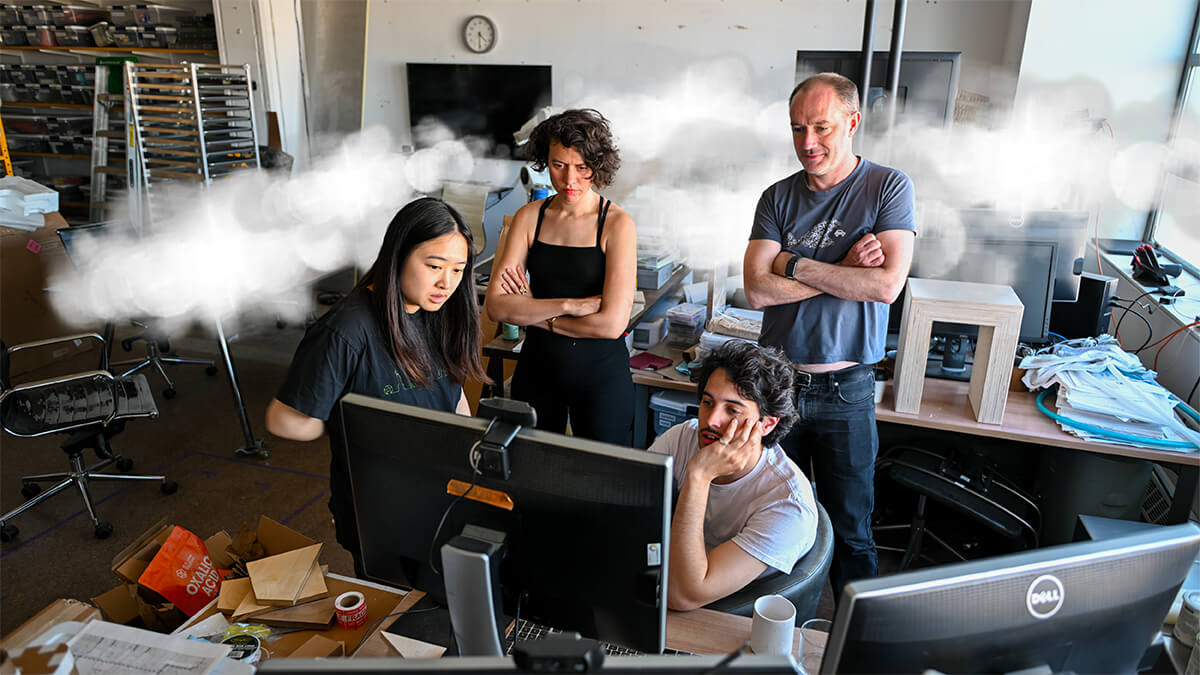
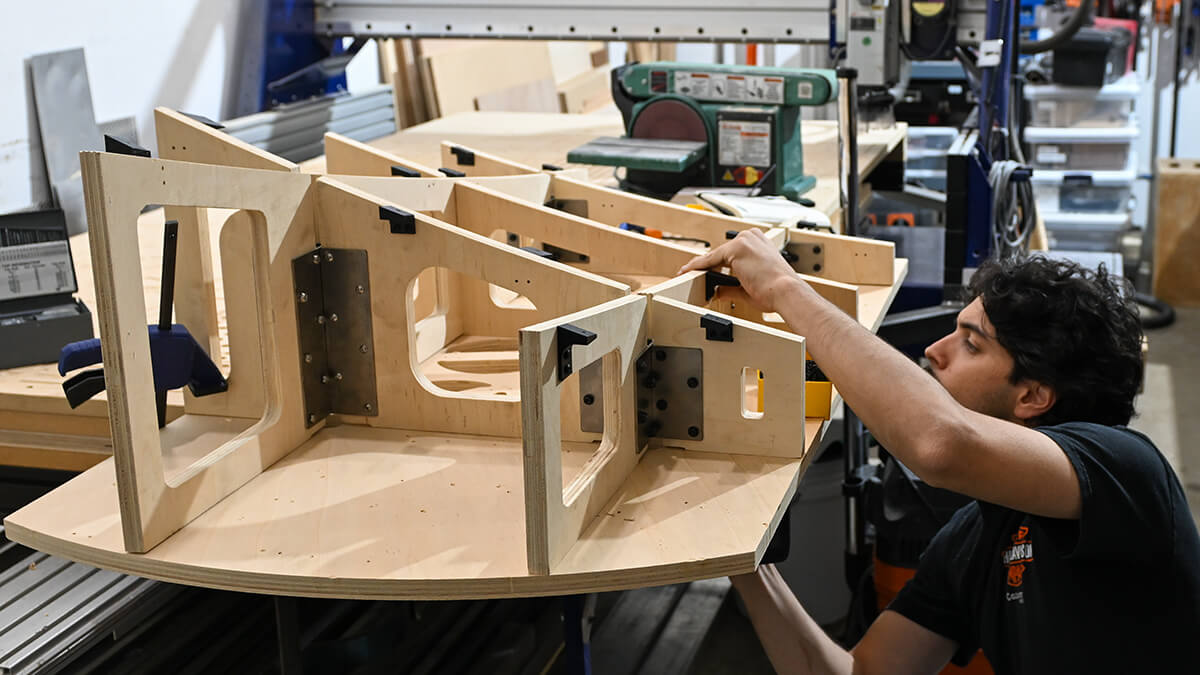
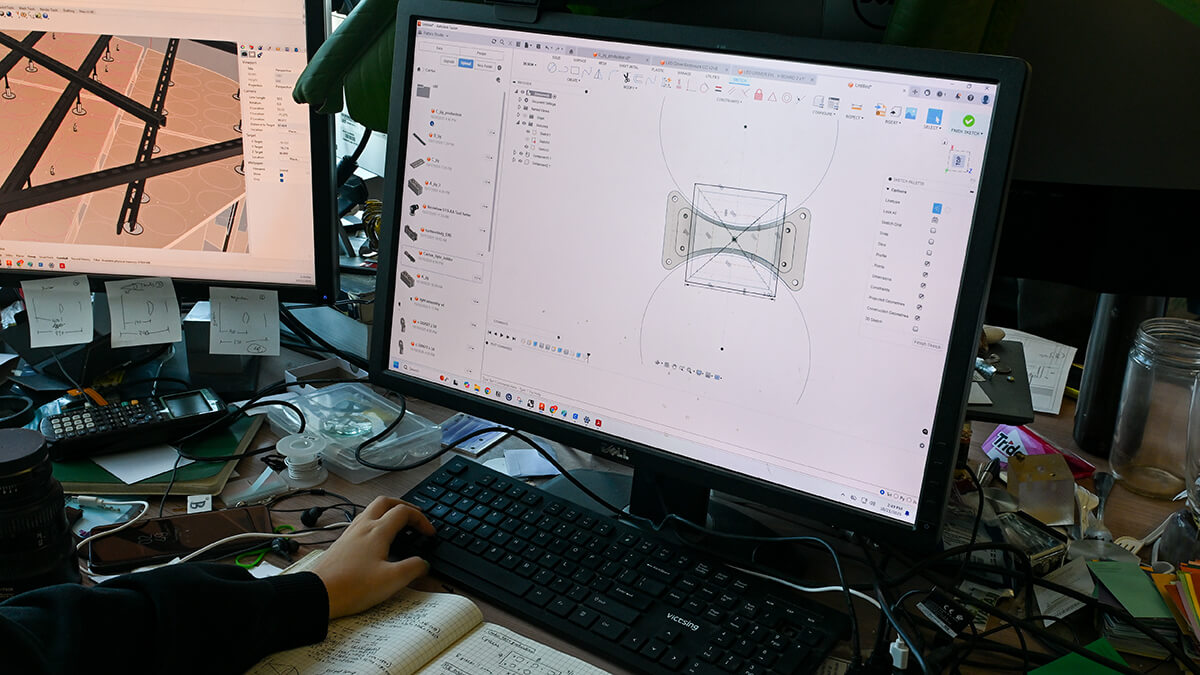
Because this particular sculpture is suspended through a curved ceiling(!), we needed a secondary structure to create the ceiling’s waveform. Above in the fourth image, you can see Christopher putting together a plywood waffle structure that will be assembled onto the electronics panel.
In the above carousel you can see a full module hanging from the Unistrut in our office. (Hmm, I wonder what the artwork underneath looks like?)
ELECTRONICS
In addition to being structural, these sculpture modules house all the electronics that drive the artwork.
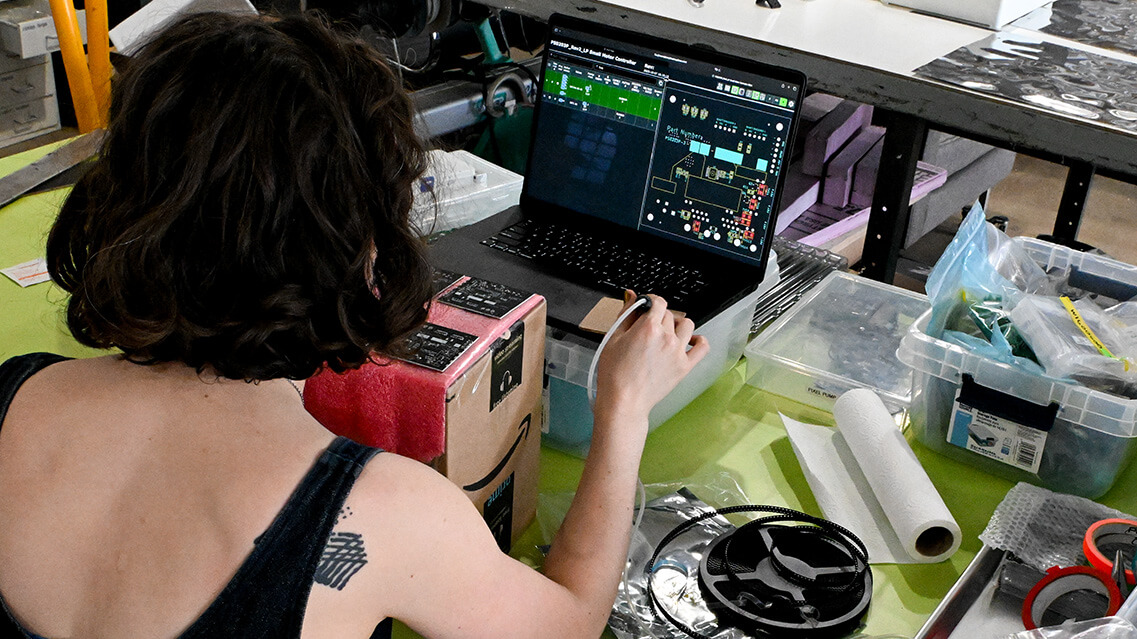
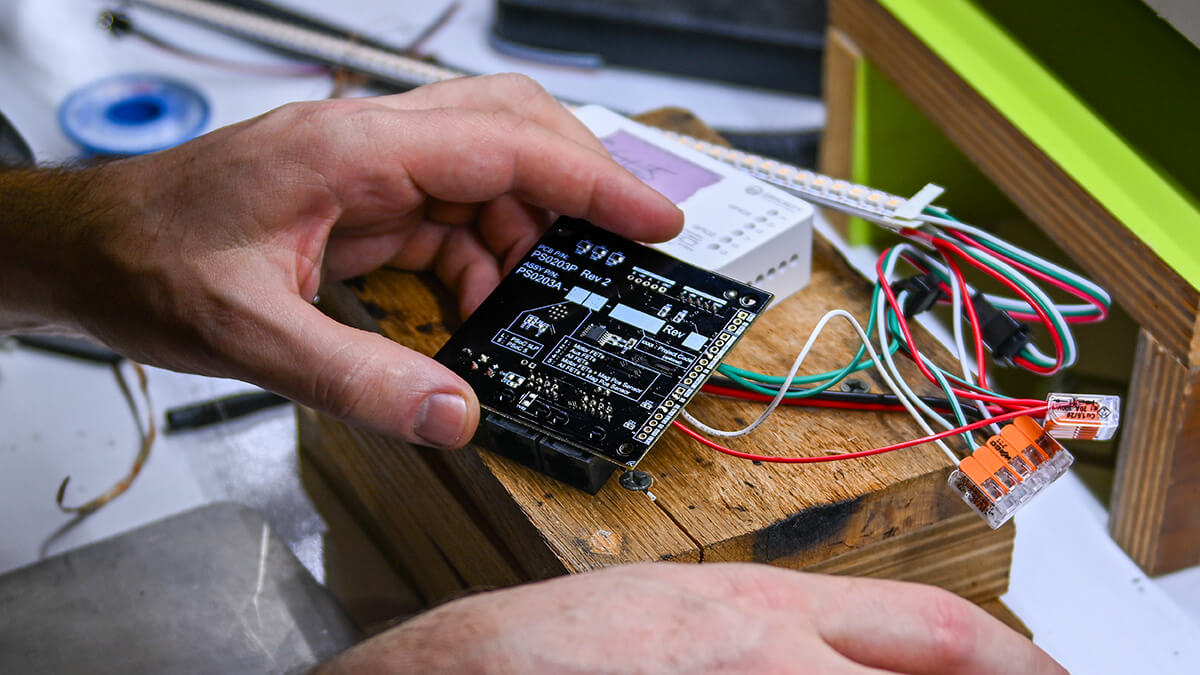
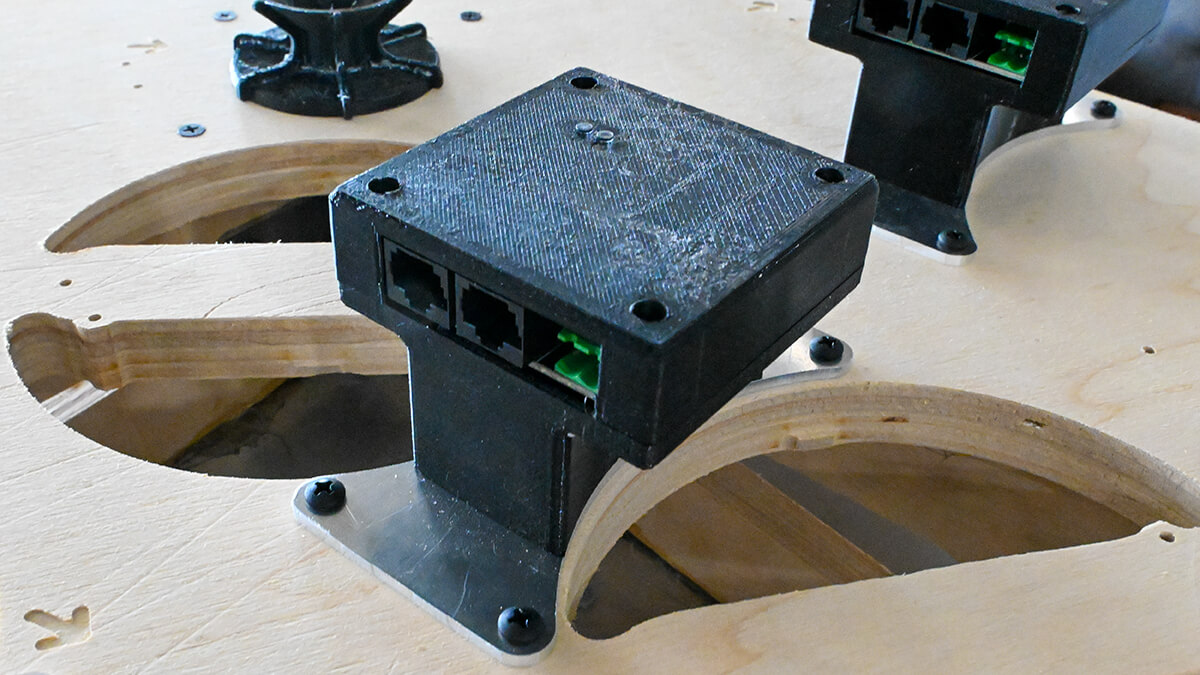
For this artwork, there are three different types of circuit boards installed onto the plywood modules above the ceiling, the most important one being the Exponent LED Driver. All of these boards are a part of a suite of hardware we’ve developed in-house for making interactive and kinetic art, called Exponent.
When we’re prototyping we cook PCBs in the studio in a Vapor Phase Two from PCB Arts. Then we pop them into the enclosures we print en masse in the Ultimakers and assemble those enclosures onto aluminum mounting plates we cut out on the tiny ShopBot.
TEAMWORK
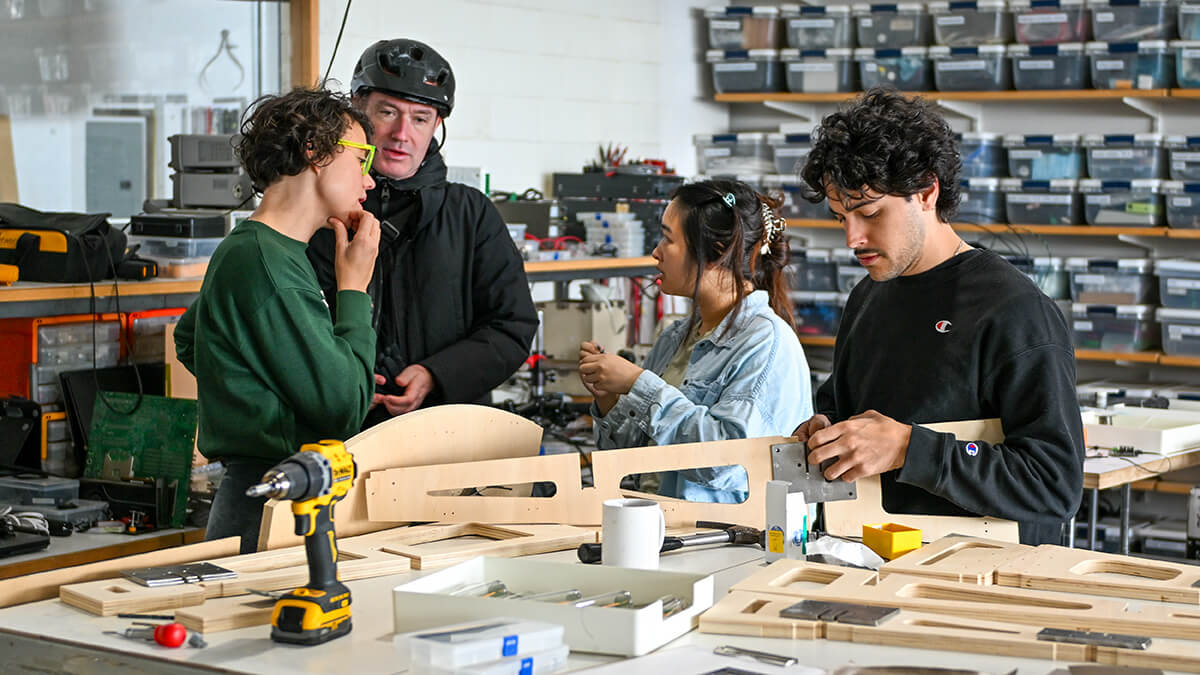
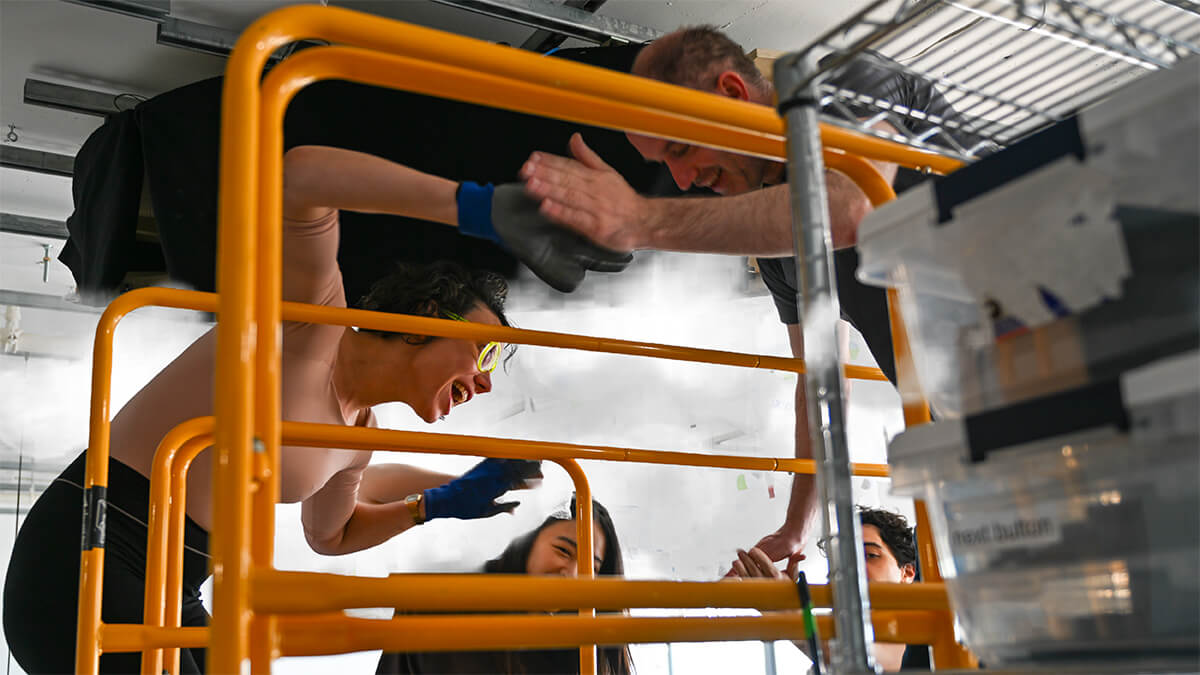
Once the support structure and electronic components are fabricated, the last and best step is to put the sculpture module up into the office ceiling for testing. We design custom jigs to make installation and deinstallation as efficient as possible on-site, but sometimes when we’re troubleshooting the first installation in the studio we all drop what we’re doing to lend a hand.
Hope you enjoyed going above the ceiling with us!
If you’ve got a ceiling you want to put a sculpture on (or a wall, or a floor) email us at info@pattenstudio.com or call (718) 414-6158.
Want to develop a parasocial relationship with our team? Follow us @pattenstudio on Instagram, or follow Patten Studio on LinkedIn.