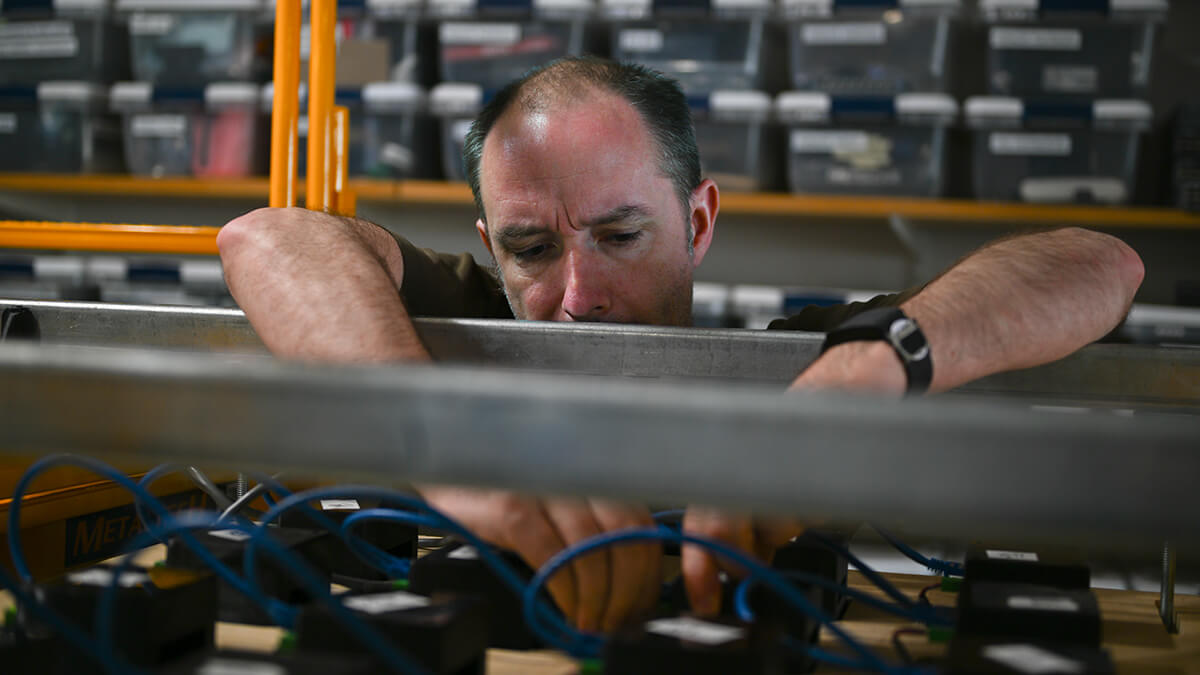
The robots are taking over—but don’t worry, they’re small!
Our studio’s secret weapon in designing interactive and kinetic art projects for clients like Intel, Barneys, and Estée Lauder? A strong foundation in robotics.
Over the past 20 years—yes, Patten Studio is almost old enough to drink!—the team has gotten to do a bunch of exciting things with robots. We’ve created autonomous, self-piloting robots that interact with people or their environment. These have ranged in size from larger-than-a-child to smaller-than-a-cupcake (we promise that these units of measurement do not show up in our drawing sets). We’ve also created experiences using off-the-shelf industrial robots. We like to joke that Cookie, the studio’s industrial KUKA robot arm, is our Director of Human Resources.
But if we were asked to choose a favorite robot to wax poetic about (and all other robots, please forgive us, we know you read our newsletter), it would be Swarm.
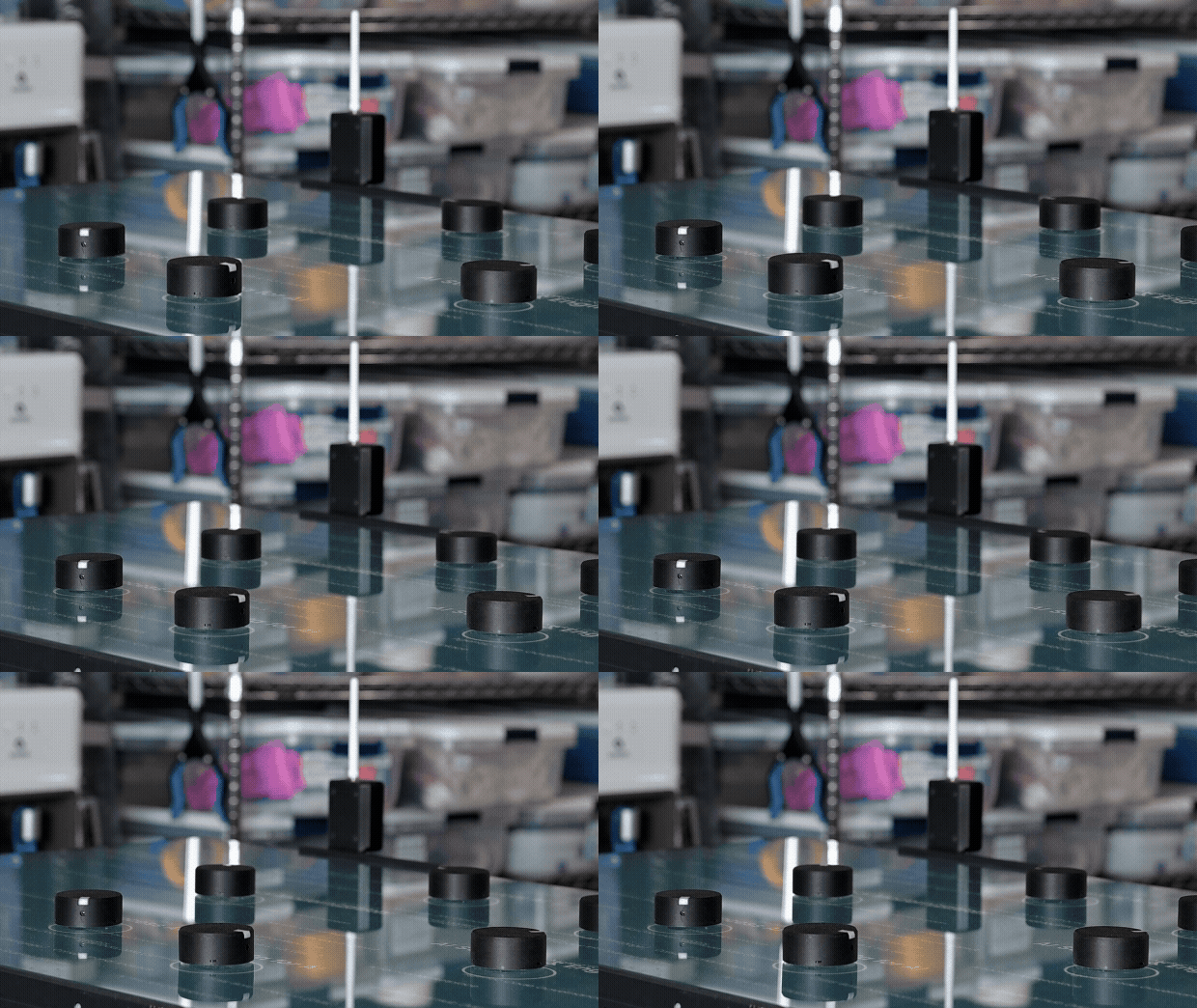
Now, what is Swarm? Swarm is a lot of things, because it’s application-agnostic. In the simplest terms, Swarm robots serve as physical handles for interacting with digital content. Swarm is a pod of autonomous, self-driving robots that you can grab, twist, drag, and guide around a touchscreen to process information and solve complex problems.
The idea is that through haptic feedback Swarm makes complex data easier to understand. For example, in a protein folding simulation, a scientist using a Swarm puck to fold a protein might experience resistance from the puck, indicating that the fold is mathematically implausible. Translating a high-dimensional math problem into a physical sensation helps to enhance our understanding.
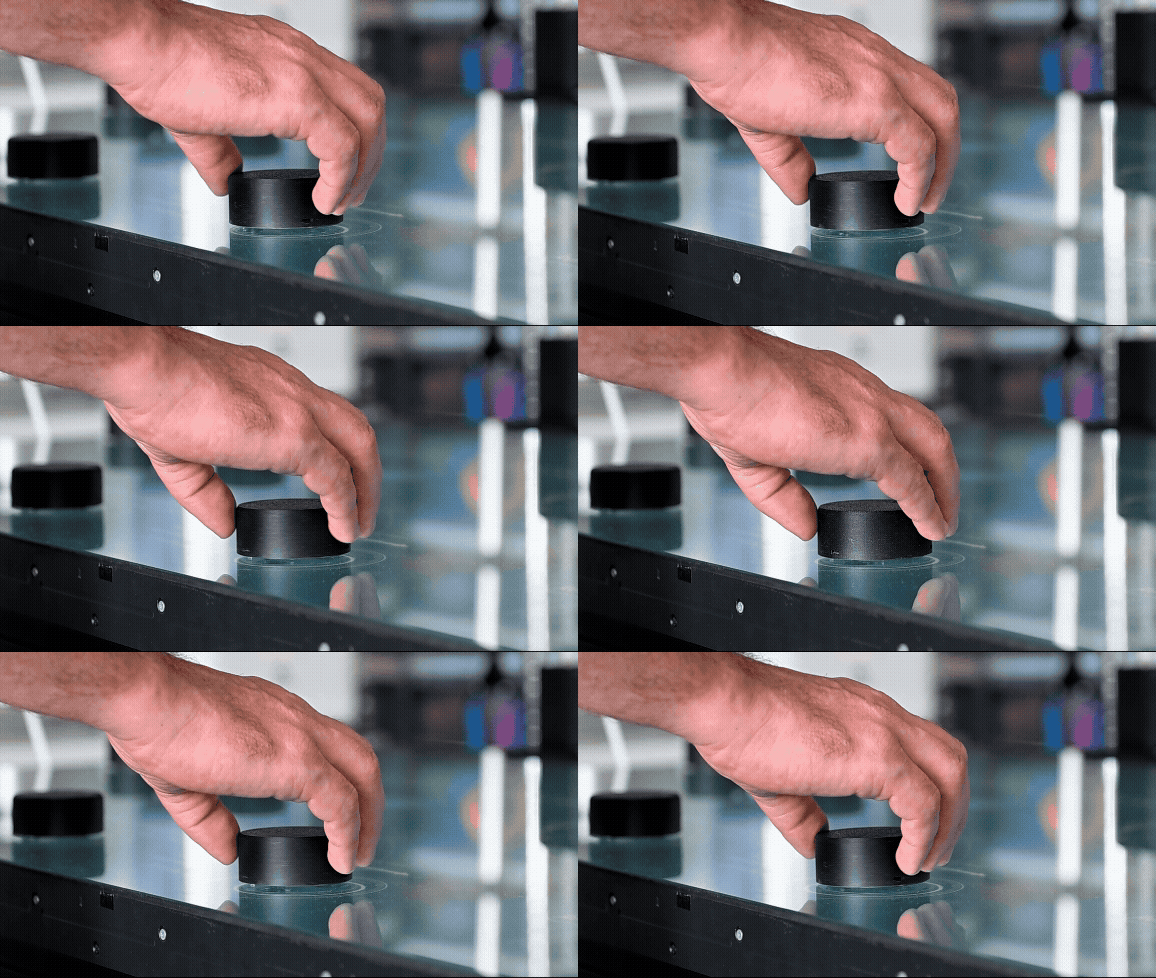
James developed Swarm as the continuation of his PhD research in the Tangible Media Group under Hiroshi Ishii at the MIT Media Lab. The original PICO pucks moved around an interactive tabletop surface using electromagnets. PICO was novel for exploring how mechanical constraints can help us solve complex spatial layout problems, but the electromagnets were so heavy they caused the tabletop to sag. The core idea behind PICO was then developed into Thumbles, a precursor to Swarm: wheeled, autonomous robots that navigated a projection-mapped surface.
Today Swarm robots self-pilot around a touchscreen, rather than a projection-mapped environment. This change increased interface responsiveness, improved image quality, and made setup a lot easier.
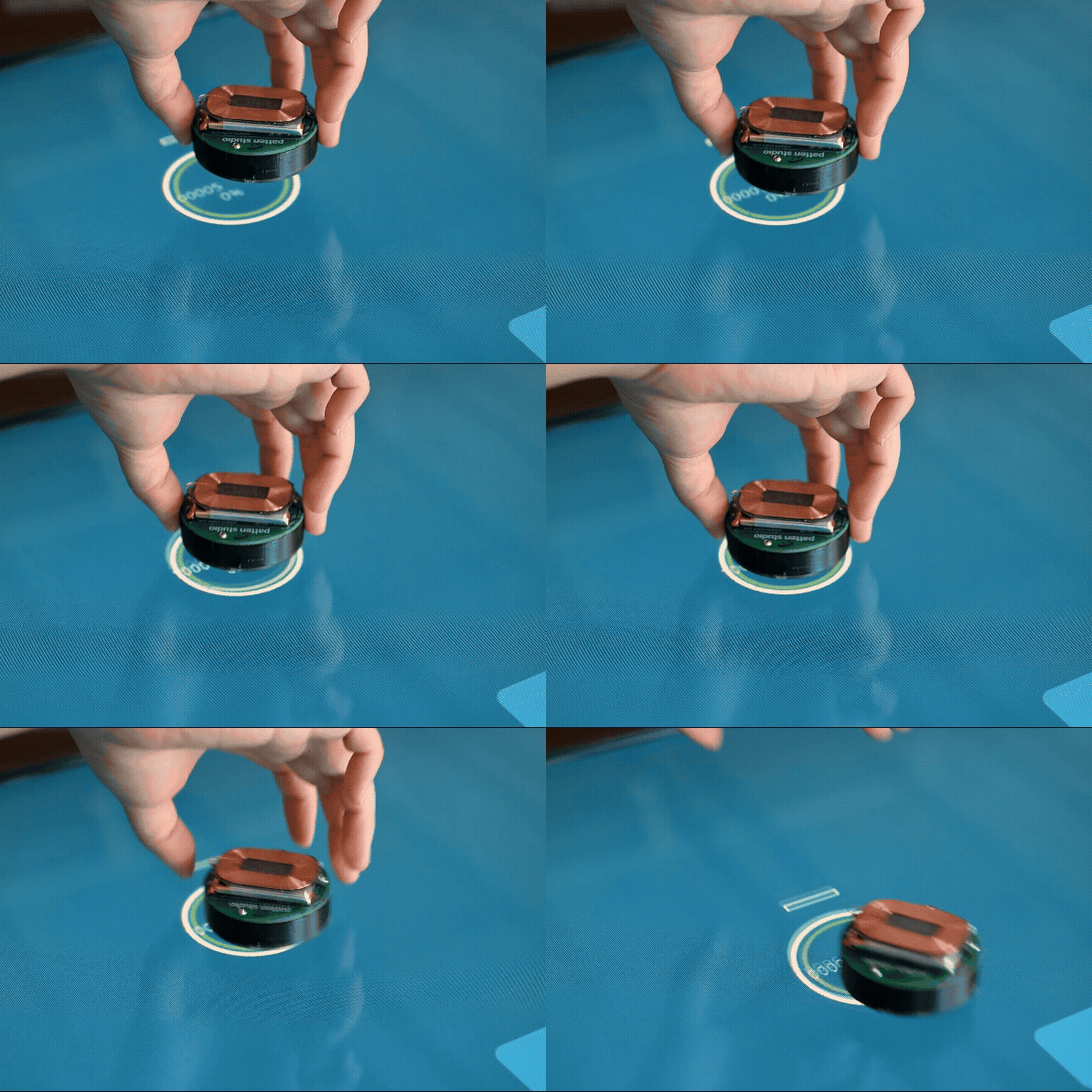
Swarm’s technology has been used for a range of applications: as an interactive exhibit in a museum (Create a Chemical Reaction at the Museum of Science and Industry in Chicago), a learning tool for college and university students, and an experiential activation or problem-solving tool for corporations.
What would you do with Swarm? Live-mix electronic music? There are no bad ideas! Except this one.
Have a robotics project in mind? We can help.
Email us at info@pattenstudio.com or call (718) 414-6158.
Want to see behind-the-scenes content of our team making Swarm robots, kinetic sculptures, and other projects? Follow us @pattenstudio on Instagram, or follow Patten Studio on LinkedIn.